
Shop All


What Is Paneling? Why Your Bottles Cave In (and How to Stop It)
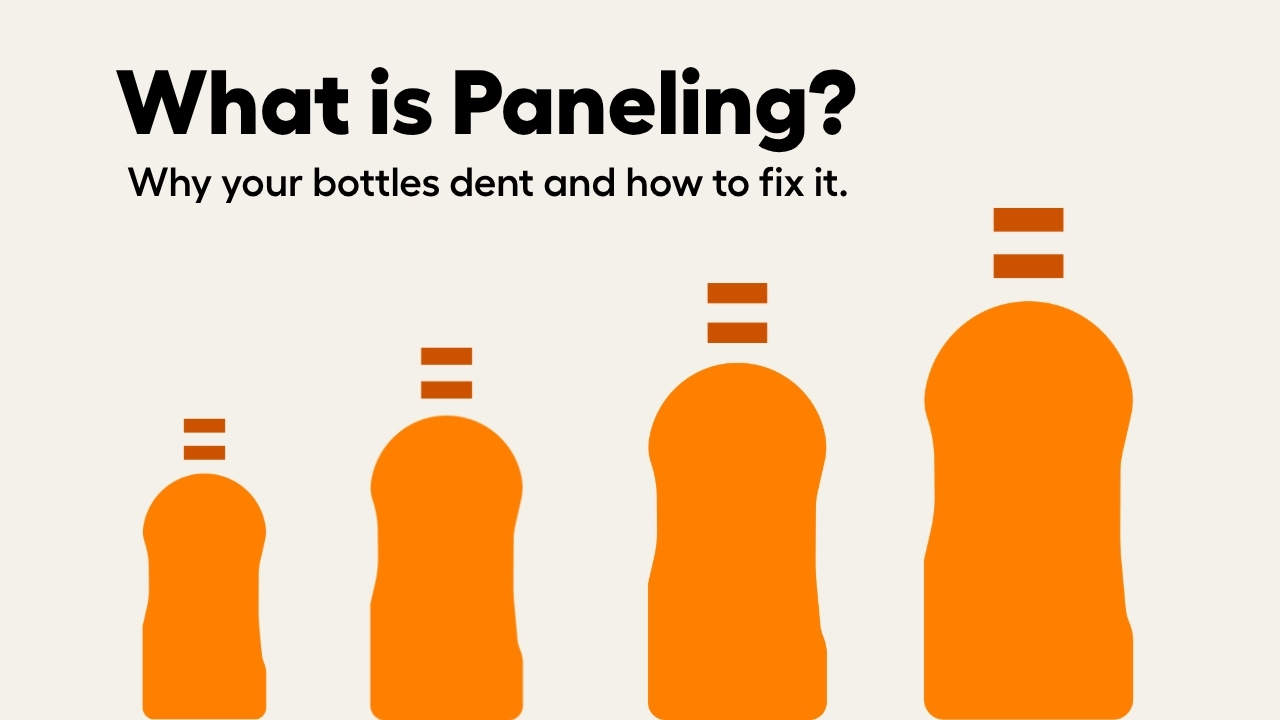

Your product looked great leaving the fill line. A week later, a customer sends you a photo of that same bottle now looking like it lost a fight with a vacuum cleaner. The sides are sucked in, the label is starting to wrinkle, and the whole thing looks more deflated than the balloons still hanging around from your 3-year-olds birthday party last month.
That caved-in look has a name. Once you know it, you will start seeing it everywhere: paneling.
What Paneling Actually Is
Paneling is when a container’s walls dimple or cave in after it has been filled and sealed. It is a pressure problem. When the air pressure outside the bottle becomes greater than the pressure inside, the atmosphere pushes the walls inward until they pucker.
The reason it matters goes past looks. A paneled bottle is harder to sell (customers see a dented bottle and thing “old” or “damaged”), and depending on the cause, it can be a sign that some of your product has escaped the container.
Why Bottles Panel in the First Place
The most common trigger is heat. A lot of products go into the bottle warm: sauces, candles, some cleaners. When you fill hot, the air inside the bottle is warm and expanded. When you cap it, the product cools, and that air contracts. Then, the volume inside shrinks, the pressure drops, and the walls get pulled inward to make up the difference.
The bigger the temperature swing, the harder the pull. Filling at 180°F and then shipping to a 70°F warehouse gives those walls a real reason to move.
Heat gets most of the blame, but there is a slower cause too. Potent ingredients like fragrances, solvents, and degreasers can permeate straight through the plastic wall as a vapor. As they escape, the contents lose mass and pressure, and the same vacuum forms, just over weeks instead of minutes. That is how a bottle leaves your facility looking fine and arrives on a shelf looking… not fine.
A couple of other situations can do it too. Fill a bottle in Denver, ship it to sea level, and the thicker air down low can press the panels in. Thanks Denver.
How to Keep Your Bottles From Caving In
The right fix depends on which version of the problem you have. Here are the levers worth pulling, roughly in the order most people reach for them.
- Cool the product before you fill it. If heat is the issue, let the product come down toward room temperature before it goes in the bottle. Cooler product means the inside air was never expanded to begin with, so there is nothing to contract later.
- Get your headspace right. Headspace is the gap between the top of your product and the top of the container. That gap gives your product room to expand and contract with temperature without forcing the walls to move. Too little, and a warm product has nowhere to go. The right amount lets the bottle ride out the temperature swing. Think of it as breathing room for your bottle.
- Fluorinate the bottle. For products that panel by permeating through the wall, the most common solution is fluorination, which gets its own section below.
Beyond those three, the bottle itself can help. Some bottles are designed with vacuum panels or reinforcing ribs that flex on purpose, so the rest of the wall stays smooth. Filling lines that purge the leftover headspace with nitrogen before capping head off the problem from another direction. And if a product is genuinely aggressive, the right answer is sometimes a different material altogether.
When Fluorination Is the Answer
Fluorination is a gas treatment. Bottles go into a chamber where fluorine gas bonds to the plastic and changes it at a molecular level, building a barrier right into the surface. Think of it as a force field that keeps your product’s most restless molecules from wandering off.
That barrier dramatically cuts how much gas and vapor can pass through the wall, which is what stops the slow, permeation style of paneling. It has a useful side effect, too: fragrances stay stronger and flavors stay truer, because the parts that were escaping now stay put. And before you ask, the treatment is non-toxic and FDA approved.
Most products are perfectly happy without it. The ones that tend to need it are the strong personalities: solvents, cleaners, degreasers, lighter fluid, insecticides, paint thinners, and a lot of fragrances and flavors.
One detail worth knowing before you commit to a bottle. Fluorination works on polyethylene (HDPE and LDPE), polypropylene, and PVC. PET, the clear plastic behind a lot of beverage bottles, cannot be fluorinated, so it is worth confirming your material early if you are packaging something potent.
There are also five levels of fluorination, and the right one depends on your product. That is a good moment to talk to a packaging consultant. We can pull samples, help you figure out which level fits, and get your plastic bottles treated and delivered. (Here is the deeper dive on fluorination if you want it.)
Paneling FAQs
What is paneling in plastic bottles?
Paneling is when a sealed bottle’s walls dimple or collapse inward after filling. It happens when the pressure inside the bottle drops below the pressure outside, so the surrounding air pushes the walls in.
What causes a bottle to panel?
Usually a vacuum. Hot-filled products create one as they cool and the trapped air contracts. Potent products create one slowly by permeating out through the plastic. Altitude changes and moisture loss can cause it too.
How do you prevent paneling?
Cool the product before filling, dial in the right headspace, and fluorinate bottles when the product permeates. Bottle designs with vacuum panels and nitrogen purging on the fill line can also help.
Does paneling mean my product is ruined?
Not always. If the cause is hot-fill cooling, the product inside is usually fine and the issue is mostly cosmetic. If the cause is permeation, some of your product has been escaping, which can mean lost quality along with the lost shape.
What is fluorination, in plain terms?
It is a gas treatment that bonds fluorine to the plastic and builds a barrier into the bottle wall. That barrier blocks most of the gas and vapor that would otherwise pass through, which prevents permeation-driven paneling. It is non-toxic and FDA approved.
Can any bottle be fluorinated?
Polyethylene, polypropylene, and PVC take fluorination well. PET cannot be fluorinated, so check your material before you settle on a bottle for a strong product.
You Do Not Have to Live With Dented Bottles
Time for the obvious disclosure: this is a blog post by a packaging company, and it is about to suggest you call the packaging company.
If your bottles keep showing up dented, it is fixable, and usually faster than you would guess. Call us at (800) 473-4144 and an actual human consultant will ask what you are filling, how, and at what temperature, then help you find the fix for your fill.
Amber Glass
Articles
Blog
Bottles
Closures
Container Updates
Cosmetics and Beauty
Customer Stories
Environmental Impact
Food and Beverage
Glass Bottles
Glass Jars
Guide
Guides
Health and Pharmaceutical
Infographic
Infographics
Mason Jars
Metal Containers
Oils and Aromas
Packaging Design
Plastic Bottles
Plastics
Sustainable Packaging
The Fun Stuff
Trends and Technology
Uncategorized
Videos


