Shop All


Starting a Wellness Brand? 5 Things I Wish I Knew First

By LJ Eggert
Added November 12, 2026
Updated November 12, 2026
Updated November 12, 2026
8 minutes read
When my kids were four and six, I was misdiagnosed with early onset Alzheimer’s and MS. It turned out to be tick-borne disease, and the conventional repellents I’d been using made my symptoms worse, so I started mixing my own at the kitchen table. That blend became TickWise, and the kitchen table became 3 Moms Organics. (The three moms are me, my customer, and Mother Nature, in case you were picturing a very crowded kitchen.)
I never set out to start a business. I set out to keep my family from getting bitten, and I learned how to start a wellness brand one surprise at a time. If you’re thinking about launching a business, or you’re a few months into running one, these are the five things I wish someone had told me before I filled my first bottle.
1. Learn Your Regulations Before You Build Your Product
The regulations for a wellness product decide what can go in the bottle and what can go on the label, so learning them first saves you from building your product twice. I learned that the expensive way.
Here’s an example. Because, TickWise repels insects, it counts as a pesticide, even though it’s made from plant oils. That puts it under three layers of rules. First come the EPA’s conditions for minimum risk pesticides, which spell out which ingredients you can use and what your label has to say. Then there’s the labeling guidance state regulators share through the Association of American Pesticide Control Officials (AAPCO). Then every state’s pesticide department reviews the label for itself, so every word on my bottle has been read by somebody in every state that requires registration. Even the wording has rules: a product like mine can say it repels ticks, but it can’t say a thing about the diseases ticks carry.
Here’s some general examples of who regulates which claims:
| If it claims to… | Example | Regulated as | Who |
|---|---|---|---|
| Repel bugs | Tick spray | Pesticide | EPA and states |
| Moisturize or smell nice | Lotion | Cosmetic | FDA |
| Treat a condition | Eczema cream | Drug | FDA |
| Just clean (true soap) | Bar soap | Consumer product | CPSC |
| Support the body | Immune supplement | Supplement | FDA |
It took me a solid seven months to figure out what I could put in the product, what I couldn’t, and how my labels were supposed to look. Since I hadn’t done that first, we had to take the product apart and rebuild it around the rules. A lotion, a supplement, and a bug spray all answer to different agencies (the FDA covers the first two, the EPA and the states cover the third), so find out which rules are yours and read them before you fall in love with a formula. It’s less fun than picking a scent, and a lot cheaper than reprinting labels for 50 states.
2. Choose Packaging That Works With Your Formula
Packaging has to be chosen around your formula, because not every plastic gets along with every ingredient. Once I finally had a formula I trusted, I had no idea what to put it in. Essential oils can be hard on some plastics, so the first questions were which bottle could hold them and which sprayer would survive them. After that came questions I never would have thought to ask. Will it spray at the right angle? Will it still work upside down when you’re spraying your kid’s ankles? Does one pump cover enough skin?
Bottle color mattered before the label did. Heat and sunlight damage anything made with essential oils, so we needed a bottle that would filter some of that light out. My packaging consultant helped us work through it, and we went with a blue bottle. It cuts down on the light reaching the oils, and it became the thing people know me by: “Oh, you’re the one with the really pretty blue bottle” is something I actually hear at the softball field.
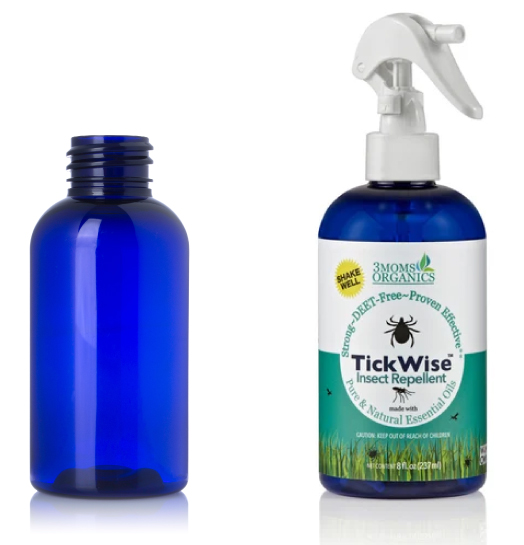
I also once called that same consultant to ask how you find the diameter of a bottle so I could size a label. It had been a long time since geometry class, and they answered like it was a perfectly normal question, which I appreciated more than they knew. Bring your formula into the packaging conversation early, ask how your ingredients will interact with the bottle and the closure, and test your product in the actual packaging before you order thousands.
3. Show People Your Product Works
Showing people your product works will do more than telling them, especially in a wellness market where everyone says theirs is the good one. My first customers were friends and family who watched me spray my kids down at softball games and asked if I could make them a bottle. Then their friends asked. At one point my neighbor called to ask why strangers kept showing up at my house with cash, which is a fair thing to wonder.
Reaching people beyond my neighbor’s list of suspicious visitors was harder, because “try this, it works” doesn’t mean much from a stranger on Facebook. So, I ran a very unofficial experiment. I sprayed a piece of pink construction paper with TickWise around the border and dropped the ticks in the middle. They wouldn’t leave the page. People shared it all over Facebook, and it did more for us than anything I could have written.
The pink paper got us started, but regulators want real data. When New York State told us we needed to bring the product up to the level required for registration, we sent it to a third-party lab for a blind efficacy study, the kind of data state regulators can require for natural repellents. To be a registered natural repellent, we had to prove we were as effective as DEET at two hours, which is a nerve-racking thing to find out after you’ve mailed off something you started making in your kitchen. TickWise came back 100% effective against ticks at two hours and 100% effective against mosquitoes at 1.75 hours. That study replaced construction paper as our proof, and being registered in every state that requires it gives us a little street cred.
Certification helps the same way. TickWise is MADE SAFE certified, which means it’s made without endocrine disruptors or harsh chemicals, and as far as I know, it’s the only repellent that is. It’s hard to get, and customers can look it up for themselves. Getting onto Amazon was the other big turning point, because it put us in front of customers I never could have reached from the east end of Long Island.
4. Spend Slowly and Let Demand Tell You When to Scale
Spending too much money too fast is the most common mistake I see new entrepreneurs make, and holding back is harder than it sounds. 3 Moms Organics started in my kitchen, moved into my basement, and stayed there a lot longer than I planned. I thought about moving out more times than I can count, but we just weren’t ready.
Our first production line was little bottles at the kitchen table, 15 drops of cedarwood in each, one row at a time. Then came small filling machines, then bigger ones, then the puzzle of keeping oil and water mixed long enough to get them into a bottle (oil and water don’t care for each other). One summer, my friends and I filled about 37,000 bottles out of that basement, and they all said that if I made them do it again, they would never be my friends again. That’s when we found a manufacturer, through the Women’s Business Enterprise National Council (WBENC), and the next season they were producing our bottles for us.
Your customers will tell you when it’s time to scale. When you can’t make enough product to keep up with demand, you’re ready, and until then, keep your money in the house and be careful with every dollar.
5. Surround Yourself With People Who Know What You Don’t
Surrounding yourself with people who know more than you is the best advice I can give a new entrepreneur. You know what you know, and there’s no shame in admitting what you don’t, as long as you go find the person who does. When I started, I didn’t know what a profit margin was. I didn’t know what a diameter was either, which you already knew.
Networking became the way I learn. I’m part of the National Retail Federation, and groups like the NRF and WBENC put me in rooms with business owners dealing with the same regulations and advertising rules I am, usually before those rules arrive. Those people became confidants and friends. Without them, this would be a lonely job, and I wouldn’t be nearly as far along.
The same goes for your suppliers. You want a partner you can grow with, because the panicked phone calls will come. I’ve called my packaging consultant after landing a big order without enough bottles on hand, and I’ve leaned on them to make sure our tops are matched to our bottles well enough to cross the country full of product. If I don’t have a bottle and a sprayer, I don’t have a product, so the people who supply them are part of my team.
What I’d Tell Myself on Day One of My Wellness Brand
If I could start my wellness brand over, I would have started earlier. The CDC estimates that about 476,000 people are diagnosed and treated for Lyme disease every year, and I remember exactly how it felt when that number found its way into my home.
The one piece of advice I’d give myself on day one is to enjoy the little moments. Enjoy the 500th sale. Enjoy the 1,000th. Every bottle is one more person who gets to go outside without worrying about tick-borne diseases. That’s worth celebrating.
You can find TickWise at 3momsorganics.com and on Amazon.
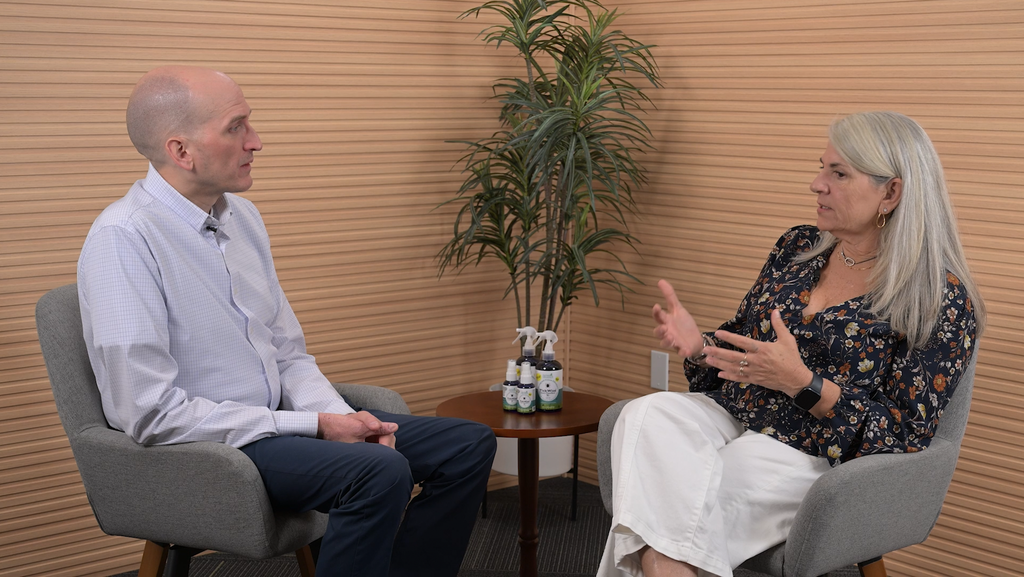
LJ drove in from East Hampton to sit down with us after seven years of being phone friends, and the full conversation is in the video above. If you’re starting a wellness brand and stuck on the bottle, the sprayer, or which plastic can handle your essential oils, call us at (800) 473-4144. We’ll even help with the geometry, too.
Amber Glass
Articles
Blog
Bottles
Caps, Closures & Dispensing
Closures
Container Updates
Cosmetics and Beauty
Customer Stories
Environmental Impact
Food and Beverage
Glass Bottles
Glass Jars
Glass Packaging
Guide
Guides
Health and Pharmaceutical
Infographic
Infographics
Mason Jars
Metal Containers
Oils and Aromas
Packaging Design
Plastic Bottles
Plastics
Sustainable Packaging
The Fun Stuff
Trends and Technology
Uncategorized
Videos